How We Build

Modular design and engineering planning for modular construction in Canada

How We Build Modular Projects

Modular construction is not a shortcut—it is a structured delivery methodology. At Modular Solutions Canada (MSC), we approach modular building as an integrated process that prioritizes planning, coordination, quality control, and predictable execution.

Our process is designed to reduce uncertainty, improve coordination across disciplines, and deliver buildings that meet performance, regulatory, and operational requirements across residential, commercial, industrial, and institutional projects.

An Integrated Modular Delivery Approach

Successful modular projects begin with early alignment. Rather than treating design, fabrication, and construction as separate phases, our approach integrates these activities from the outset.

By coordinating architectural intent, engineering requirements, fabrication constraints, and site conditions early, we reduce downstream conflicts and improve schedule certainty. This integrated approach allows multiple workstreams—such as site preparation and module fabrication—to progress in parallel under a coordinated plan.

Design & Engineering Coordination

Design and engineering coordination is critical in modular construction. Architectural layouts, structural systems, mechanical services, fire separations, and building code requirements must be resolved early to ensure constructability.

Our process emphasizes:

  • Early technical coordination
  • Alignment between architectural and structural systems
  • Integration of mechanical, electrical, and life-safety requirements

This level of coordination reduces rework, supports regulatory approvals, and ensures that modular components are delivered ready for installation.

Light Gauge Steel Framing as a Structural System
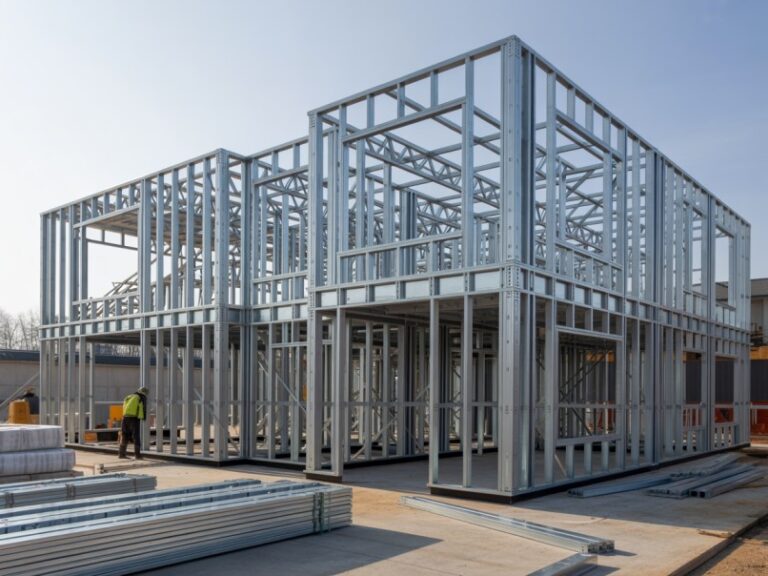
Light Gauge Steel Framing system for modular construction in Canada

Light gauge steel framing forms the backbone of many modular projects due to its precision, durability, and consistency. Steel framing systems support repeatable fabrication, dimensional accuracy, and long-term structural performance.

Steel framing is well suited for modular construction because it:

  • Maintains consistent tolerances
  • Supports complex building geometries
  • Performs reliably across Canadian climate conditions

This system allows buildings to be engineered with confidence across multiple project types and occupancies.

Off-Site Fabrication & Quality Control

A significant portion of modular construction occurs in controlled fabrication environments. This allows work to proceed independent of weather conditions and enables consistent quality control throughout the process.

Fabrication environments support:

  • Repeatable workflows
  • Ongoing inspections
  • Controlled material handling
  • Reduced site variability

By completing critical construction activities off-site, projects benefit from improved consistency and reduced on-site risk.

Site Preparation & Foundation Coordination

While modules are fabricated off-site, site preparation progresses in parallel. This includes foundation work, servicing, and access planning required to support module installation.

Early coordination between fabrication schedules and site readiness is essential. Our process emphasizes:

  • Foundation alignment with module design
  • Utility coordination
  • Clear installation sequencing

This parallel workflow reduces idle time and supports predictable installation timelines.

Transportation & Logistics Planning

Transportation is a critical component of modular delivery. Module dimensions, routing, scheduling, and site access must be planned carefully to ensure smooth delivery.

Our logistics planning considers:

  • Transportation constraints
  • Delivery sequencing
  • Site access and staging
  • Coordination with local authorities when required

This planning ensures modules arrive ready for installation without disrupting surrounding operations.

Installation & On-Site Assembly

Installation is a highly coordinated phase that requires precise sequencing and experienced supervision. Modules are set using cranes and specialized equipment according to a defined installation plan.

On-site assembly focuses on:

  • Safe lifting and placement
  • Structural connections
  • Integration of building systems
  • Trade coordination

This approach minimizes on-site congestion and supports efficient project execution.

Compliance, Permits & Inspections

Regulatory compliance is addressed throughout the project lifecycle. Early coordination with consultants and authorities supports permitting, inspections, and approvals.

Our process includes:

  • Early code review
  • Documentation alignment
  • Inspection coordination
  • Compliance verification

This structured approach supports smooth approvals and reduces delays during critical project phases.

Commissioning & Project Close-Out

Project delivery does not end at installation. Final inspections, system verification, and documentation are critical to successful handover.

Commissioning and close-out activities focus on:

  • Functional verification of building systems
  • Final inspections and approvals
  • Handover documentation
  • Occupancy readiness

This ensures projects are delivered ready for use and long-term operation.

OUR FAQS

Frequently Asked Questions

What is modular construction, and how is it different from traditional construction?

Modular construction involves fabricating major building components off-site in controlled environments and assembling them on-site. The key difference is sequencing: in modular delivery, site preparation and building fabrication can progress at the same time, which typically improves schedule predictability. Traditional construction performs most work on the job site in sequence, which can increase exposure to weather delays and trade coordination issues. Modular is still permanent construction—it’s a different delivery method, not a different building standard.

Are modular buildings permanent structures built to Canadian building codes?

Yes. Modular buildings are permanent structures and must meet applicable Canadian building codes, life-safety requirements, and local authority standards—just like traditionally constructed buildings. The off-site fabrication portion does not reduce code obligations; it changes where and how the work is performed. Code compliance is addressed through design documentation, engineering, and inspections aligned to the project’s jurisdiction and occupancy type.

Why does modular construction require more upfront planning?

Modular construction requires earlier decisions because fabrication depends on finalized dimensions, connection details, building systems coordination, and install sequencing. In traditional construction, some decisions can shift later during site work. In modular, resolving structural, mechanical, electrical, fire separation, and accessibility requirements early reduces rework during fabrication and improves installation efficiency. That early discipline is what supports better schedule control later.

How do you coordinate design and engineering for modular projects?

Design and engineering coordination is handled through early alignment between architectural intent, structural systems, building envelope requirements, and MEP/life-safety integration. The goal is to confirm constructability before fabrication begins. This includes reviewing module constraints, connection points, service routes, fire ratings where applicable, and overall installation sequencing. Strong coordination at this stage reduces field conflicts and supports smoother approvals.

What role does Light Gauge Steel Framing play in your modular process?

Light gauge steel framing is used as a structural system for its dimensional stability and repeatability—two qualities that matter in modular fabrication. Steel framing helps maintain consistent tolerances, supports predictable module assembly, and reduces issues associated with warping or material variability. The framing approach is selected and engineered based on project requirements, loads, and occupancy, while maintaining alignment with Canadian standards.

How does off-site fabrication improve quality control?

Controlled fabrication environments support repeatable workflows, consistent material handling, and structured inspections. Because work is performed in a stable setting, there is typically less disruption from weather, site congestion, or trade scheduling conflicts. This enables tighter quality checks at defined stages of fabrication. The outcome is improved consistency in assembly and finishes, especially across multi-unit or repeatable building programs.

What happens on-site while modules are being fabricated?

While modules are being fabricated off-site, site work typically progresses in parallel. This may include foundations, civil work, servicing, grading, access routes, and staging planning. The objective is to ensure site readiness aligns with delivery and installation sequencing. This parallel workflow is one of the major advantages of modular delivery, because it reduces idle time between site readiness and building placement.

How are modules transported and installed safely?

Transportation and installation require detailed logistics planning, including route considerations, module sizing constraints, delivery sequencing, and site access. Installation is executed using cranes and controlled lifting plans under site supervision. Safety and coordination are critical because placement sequencing affects structural connections, building envelope continuity, and system integration. Proper planning reduces disruption, improves efficiency, and supports smoother on-site assembly.

How do permits, inspections, and compliance work for modular projects?

Permitting and compliance follow standard regulatory frameworks, but modular projects often require additional coordination because fabrication occurs off-site and assembly occurs on-site. Compliance is managed through design documentation, engineering, and inspection coordination aligned to the authority having jurisdiction. Addressing code requirements early—especially for fire safety, accessibility, and occupancy classification—helps reduce delays during approvals and inspections.

What does commissioning and project close-out include in modular construction?

Commissioning and close-out involve confirming that installed systems function as intended, final inspections are completed, and required documentation is organized for handover. This may include verification of mechanical and electrical systems, life-safety elements, and completion of remaining site or finishing activities. A structured close-out process supports occupancy readiness and provides stakeholders with clarity on operating requirements, warranties, and project documentation.
Cart (0 items)