


How We Build Modular Projects
Modular construction is not a shortcut—it is a structured delivery methodology. At Modular Solutions Canada (MSC), we approach modular building as an integrated process that prioritizes planning, coordination, quality control, and predictable execution.
Our process is designed to reduce uncertainty, improve coordination across disciplines, and deliver buildings that meet performance, regulatory, and operational requirements across residential, commercial, industrial, and institutional projects.
An Integrated Modular Delivery Approach
Successful modular projects begin with early alignment. Rather than treating design, fabrication, and construction as separate phases, our approach integrates these activities from the outset.
By coordinating architectural intent, engineering requirements, fabrication constraints, and site conditions early, we reduce downstream conflicts and improve schedule certainty. This integrated approach allows multiple workstreams—such as site preparation and module fabrication—to progress in parallel under a coordinated plan.
Design & Engineering Coordination
Design and engineering coordination is critical in modular construction. Architectural layouts, structural systems, mechanical services, fire separations, and building code requirements must be resolved early to ensure constructability.
Our process emphasizes:
- Early technical coordination
- Alignment between architectural and structural systems
- Integration of mechanical, electrical, and life-safety requirements
This level of coordination reduces rework, supports regulatory approvals, and ensures that modular components are delivered ready for installation.
Light Gauge Steel Framing as a Structural System
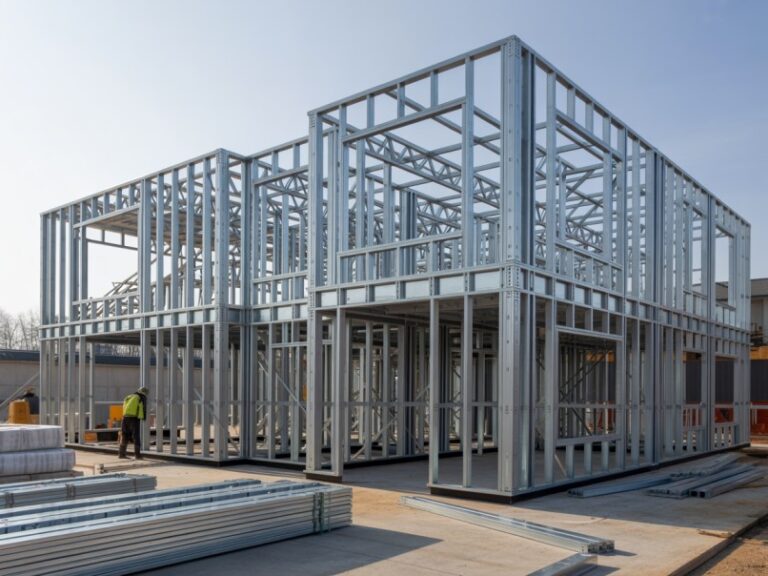
Light gauge steel framing forms the backbone of many modular projects due to its precision, durability, and consistency. Steel framing systems support repeatable fabrication, dimensional accuracy, and long-term structural performance.
Steel framing is well suited for modular construction because it:
- Maintains consistent tolerances
- Supports complex building geometries
- Performs reliably across Canadian climate conditions
This system allows buildings to be engineered with confidence across multiple project types and occupancies.
Off-Site Fabrication & Quality Control
A significant portion of modular construction occurs in controlled fabrication environments. This allows work to proceed independent of weather conditions and enables consistent quality control throughout the process.
Fabrication environments support:
- Repeatable workflows
- Ongoing inspections
- Controlled material handling
- Reduced site variability
By completing critical construction activities off-site, projects benefit from improved consistency and reduced on-site risk.
Site Preparation & Foundation Coordination
While modules are fabricated off-site, site preparation progresses in parallel. This includes foundation work, servicing, and access planning required to support module installation.
Early coordination between fabrication schedules and site readiness is essential. Our process emphasizes:
- Foundation alignment with module design
- Utility coordination
- Clear installation sequencing
This parallel workflow reduces idle time and supports predictable installation timelines.
Transportation & Logistics Planning
Transportation is a critical component of modular delivery. Module dimensions, routing, scheduling, and site access must be planned carefully to ensure smooth delivery.
Our logistics planning considers:
- Transportation constraints
- Delivery sequencing
- Site access and staging
- Coordination with local authorities when required
This planning ensures modules arrive ready for installation without disrupting surrounding operations.
Installation & On-Site Assembly
Installation is a highly coordinated phase that requires precise sequencing and experienced supervision. Modules are set using cranes and specialized equipment according to a defined installation plan.
On-site assembly focuses on:
- Safe lifting and placement
- Structural connections
- Integration of building systems
- Trade coordination
This approach minimizes on-site congestion and supports efficient project execution.
Compliance, Permits & Inspections
Regulatory compliance is addressed throughout the project lifecycle. Early coordination with consultants and authorities supports permitting, inspections, and approvals.
Our process includes:
- Early code review
- Documentation alignment
- Inspection coordination
- Compliance verification
This structured approach supports smooth approvals and reduces delays during critical project phases.
Commissioning & Project Close-Out
Project delivery does not end at installation. Final inspections, system verification, and documentation are critical to successful handover.
Commissioning and close-out activities focus on:
- Functional verification of building systems
- Final inspections and approvals
- Handover documentation
- Occupancy readiness
This ensures projects are delivered ready for use and long-term operation.