

- Your cart is empty Browse Shop

Modular Manufacturing & Fabrication
Modular manufacturing and fabrication transform approved designs into precision-built building components within a controlled production environment. At Modular Solutions Canada (MSC), this phase focuses on quality control, consistency, and coordination to support reliable project execution.
Our fabrication process supports residential, commercial, industrial, and institutional modular buildings and integrates directly with upstream design and downstream installation requirements.
Why Off-Site Manufacturing Matters in Modular Construction
Off-site manufacturing allows modular components to be fabricated under controlled conditions that support consistency, quality assurance, and coordinated sequencing. Unlike traditional site-built construction, fabrication is less exposed to environmental variability and trade congestion.
This approach supports:
- Consistent workmanship
- Improved material handling
- Structured quality checks
- Better coordination with installation planning
Manufacturing discipline is essential to predictable modular delivery.
Controlled Fabrication Environments
Modular fabrication takes place in dedicated production facilities designed to support precision assembly. Workstations, tooling, and workflows are organized to align with engineered specifications.
Controlled environments help:
- Maintain dimensional accuracy
- Support repeatable processes
- Improve safety and oversight
This controlled setting enables reliable production across varying project scales.
Engineered Framing Systems, Not Commodity Framing
Our light gauge steel framing service is not a labour-only framing trade. It is an engineered structural service delivered as part of a coordinated modular system.
Each framing package is:
- Designed to project-specific requirements
- Engineered for loads, spans, and occupancies
- Coordinated with modular fabrication and installation sequencing
This approach supports consistent quality and predictable outcomes across projects.
Light Gauge Steel Framing Integration
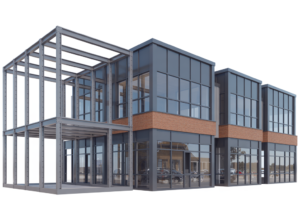
Fabrication integrates directly with Light Gauge Steel Framing systems engineered during the design phase. Structural framing, wall panels, floor assemblies, and roof components are fabricated to precise tolerances.
This integration ensures:
- Structural continuity
- Accurate module interfaces
- Compatibility with transport and installation
Fabrication aligns with engineered intent, not field improvisation.
Quality Control & Inspection During Fabrication
Quality assurance is embedded into the fabrication process. Inspections and checks are conducted at defined stages to verify alignment with drawings, specifications, and regulatory requirements.
This structured oversight helps:
- Identify issues early
- Reduce rework during installation
- Support inspection readiness
Quality control during fabrication supports downstream efficiency.
Coordination With Transport & Installation
Fabrication planning considers how modules will be transported and installed. Module dimensions, connection points, and sequencing are aligned to reduce handling challenges.
Early coordination supports:
- Efficient logistics planning
- Reduced site adjustments
- Smoother installation workflows
Manufacturing decisions directly affect on-site execution.
Supporting Predictable Project Outcomes
By resolving fabrication details before construction reaches site, modular manufacturing reduces uncertainty and supports predictable outcomes.
This structured approach helps:
- Improve schedule reliability
- Maintain quality consistency
- Reduce site-level variability
Manufacturing discipline is central to modular performance.
OUR FAQS
Frequently Asked Questions
What is modular manufacturing?
Modular manufacturing is the off-site fabrication of building components or modules in a controlled facility before transport and installation on site.
How is quality controlled during fabrication?
Quality checks are performed at defined stages to ensure alignment with drawings, specifications, and regulatory requirements.
Are modular components built to the same codes as site-built construction?
Yes. Modular components are fabricated to meet applicable building codes and project requirements.
Are modular components built to the same codes as site-built construction?
Off-site fabrication can reduce the amount of on-site work required, supporting more controlled site activity.
How are modules protected during fabrication and transport?
How are modules protected during fabrication and transport?
Can fabrication support custom modular designs?
Yes. Modular manufacturing can accommodate project-specific designs when coordinated early during design and engineering.
How does fabrication affect installation efficiency?
How does fabrication affect installation efficiency?
Are inspections required during fabrication?
Inspection requirements vary by project and jurisdiction, but fabrication is coordinated to support inspection readiness.
Can modular manufacturing support large-scale projects?
Yes. Manufacturing processes can scale to support multi-unit and large-format modular developments.
Is manufacturing part of turnkey modular delivery?
Yes. Modular manufacturing is a core component of end-to-end modular delivery.
We’d love to hear from you
What We Build
We design and deliver modular buildings for residential communities, commercial developments, industrial facilities, and institutional use.
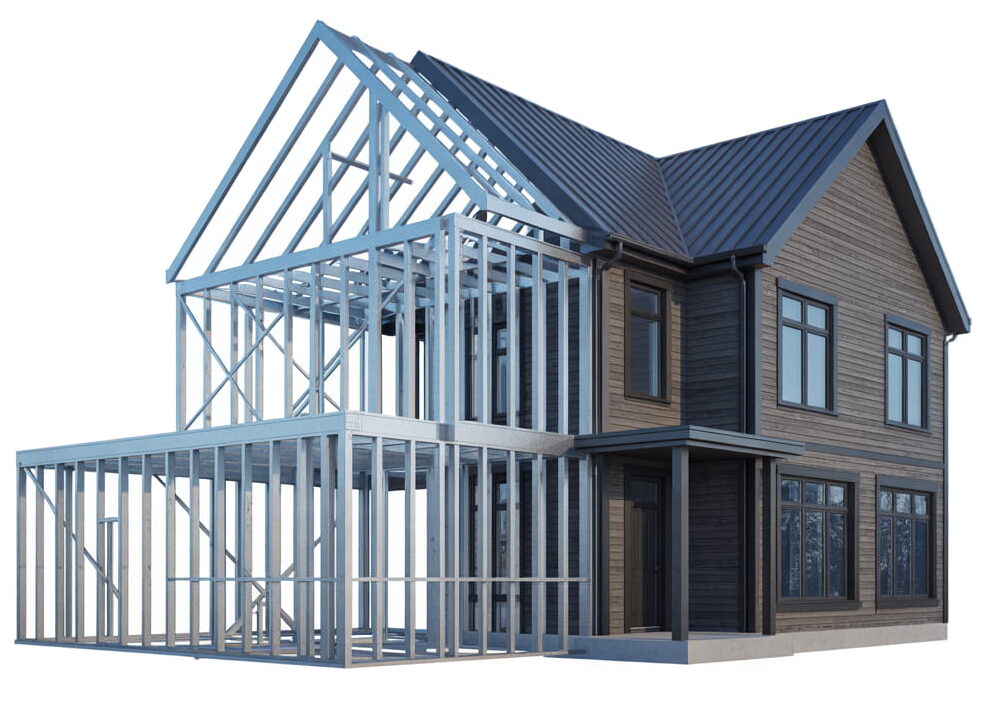
Modular Homes
From single-family homes, multi-unit housing, to purpose-built residential projects using precision-engineered modular systems that reduce construction timelines.
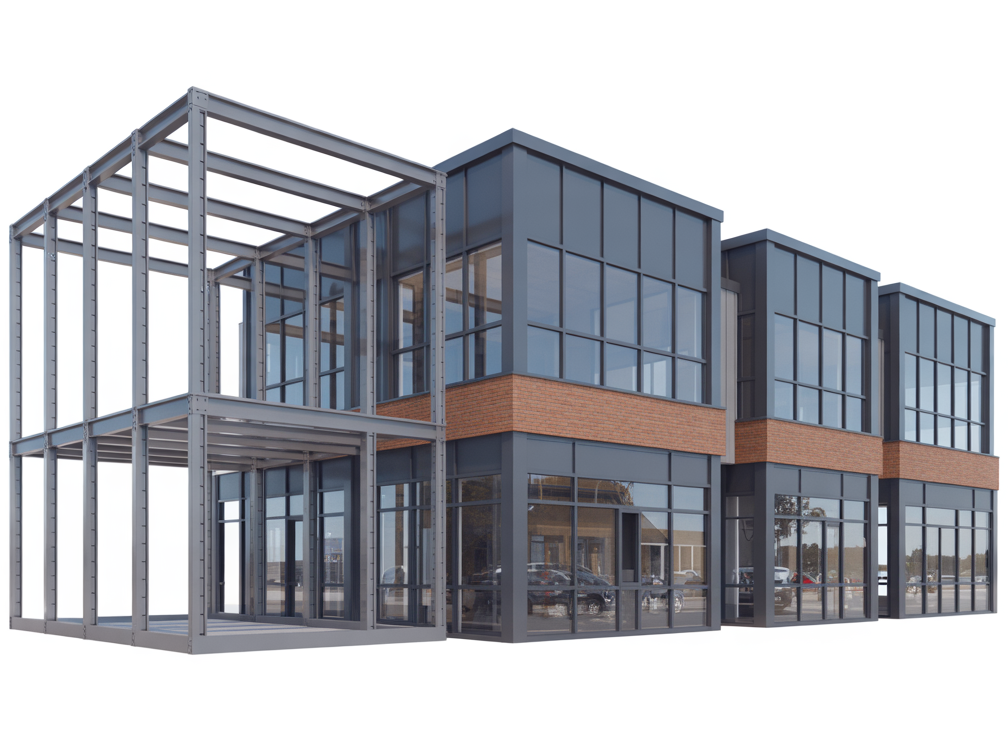
Modular Commercial
From offices and retail plazas to clinics and mixed-use developments, our commercial modular solutions support faster delivery and predictable project schedules. Let's connect.
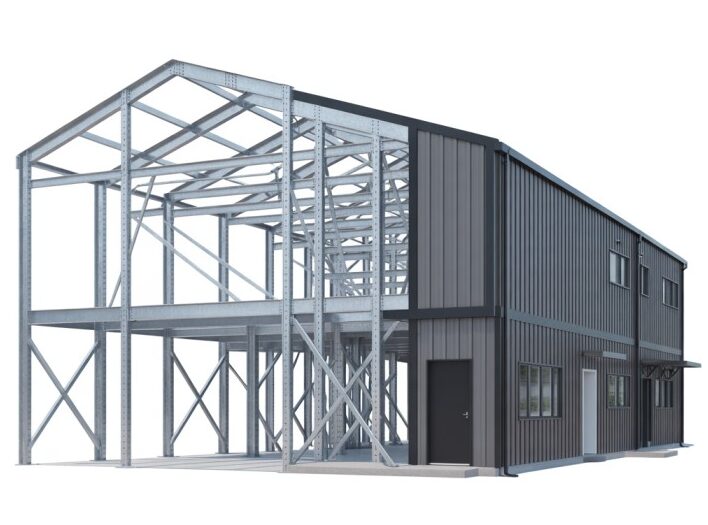
Modular Industrial
We support warehouses, production facilities, and logistics structures designed to meet operational demands while minimizing on-site disruption.
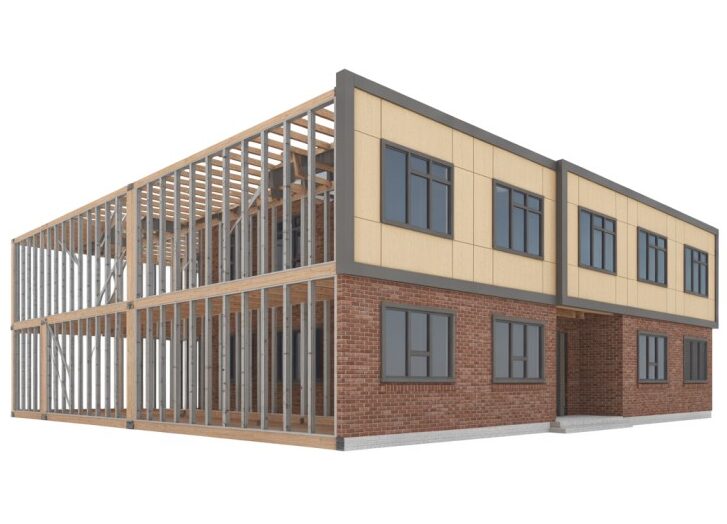
Modular Institutes
Our modular solutions support schools, healthcare facilities, and community buildings delivered with compliance, efficiency, and long-term performance in mind. Let's talk.